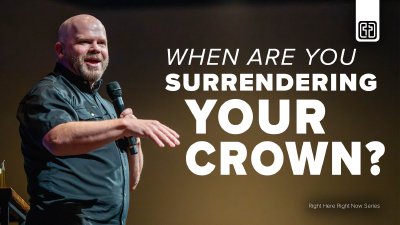
When Are You Surrendering Your Crown?
September 13, 2026 • Kris Segrest • Esther 1
What if the greatest threat to our faith is not something outside of us, but something we carry within us every single day? That is exactly what we explore as we open the book of Esther together. Though God's name never appears in this book, His fingerprints are all over it, and that truth alone should encourage us when we feel like He is absent from our own stories. We begin with one of the most powerful men who ever lived, King Xerxes, whose unchecked ego sets off a chain of events that reshapes an entire kingdom. His six-month-long feast, his demand for an audience, his refusal to accept limits, and his inability to hear the word no all paint a vivid picture of what pride looks like when it is left completely unchallenged. The book of Esther is not just an ancient story about a Persian king. It is a mirror held up to our own lives, inviting us to ask hard questions about where we have placed ourselves on the throne that belongs only to God. The central message is both simple and profound: our ego is not our friend. Whether pride shows up as the need for approval, the refusal of boundaries, the use of people as props, or the surrounding of ourselves with voices that only tell us what we want to hear, it leads to the same destination. And yet, there is hope. The same book that shows us the destruction pride brings also points us toward the humility that sets us free.