
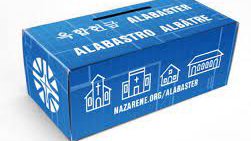

The history of Alabaster Offering: Following the end of World War II, in the late 1940s, the Church of the Nazarene was experiencing a need for more missions funding. At a meeting of the Global NMI Council, Elizabeth Vennum was asked to find a way that could be used to raise funds for land purchases and building construction needs around the world. As she rode the train home from that council meeting, she said the Lord gave her the details for the Alabaster Offering.
The offering was based on the story of the woman pouring perfume on Jesus from a container carved from soft alabaster stone. Building on that biblical story, Nazarenes were asked to put off buying new perfume for themselves or postpone purchasing something for themselves, and to give that money in the Alabaster Offering instead. In much the same way that the woman gave her bottle of perfume to Jesus, we have been called to pour out a lavish offering for others. Alabaster was first promoted using this phrase: "Give up a want to meet a need."
Alabaster has long been a hallmark of Nazarene generosity and sacrifice, and continues to achieve great things, laying foundations where people worship, heal, and learn.
The Alabaster Offering provides funds for property and buildings around the world. While we understand the church consists of the people of God and not a building, buildings erected for the purpose of ministry help provide a sense of permanence, functionally enhance ministry efforts, and convey an attitude that the Church of the Nazarene intends to "put down roots."
Alabaster funds are to be used for new churches to:
• Purchase a property or church building
• Purchase or build a church parsonage
• Build a church building
• Conversion of a property into a church gathering space
• Meet initial costs for renting a church meeting space for a limited period
Alabaster funds may also be used to:
• Purchase or build missionary homes
• Purchase or build regional or field missions facilities
• Build or repurpose buildings on Bible college campuses