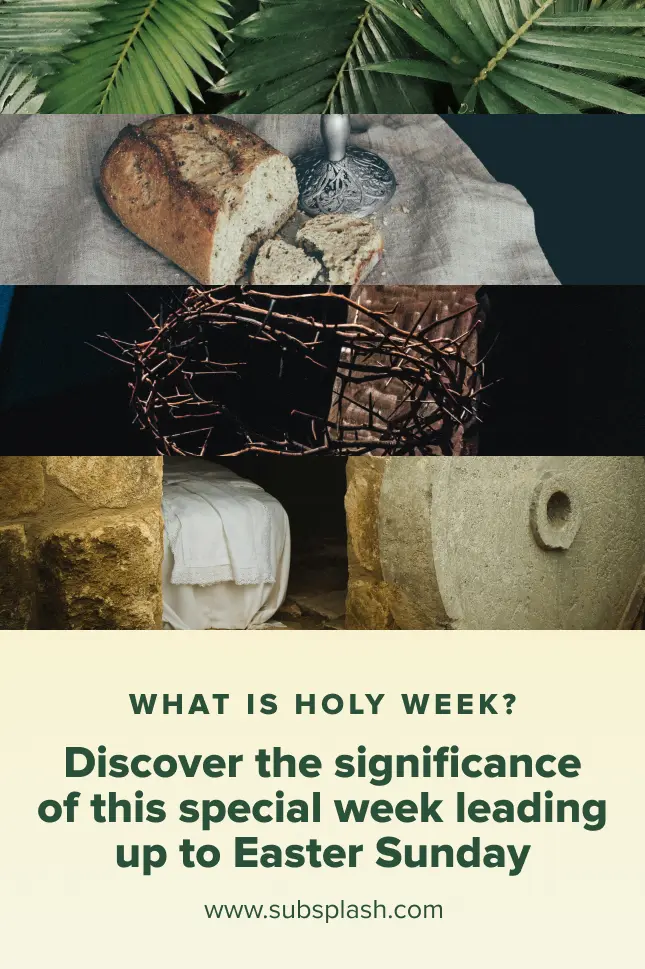
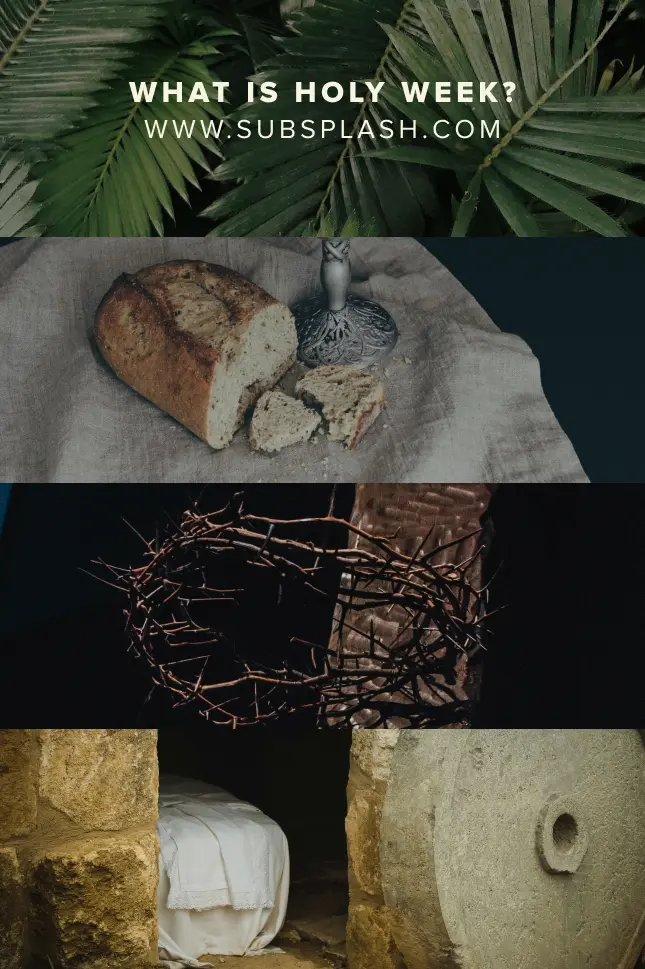
Download the What is Holy Week? Discover the significance of the special days leading up to Easter
Tools & resources to make disciples in a digital age, straight to your inbox.
Fill out the form below to schedule a demo or call our sales team at
469-564-3922

Every year, millions of believers prepare their hearts for Easter during Holy Week by reflecting on the final days of Jesus’ earthly ministry, as well as his death and resurrection. But what is Holy Week, and why does it matter so deeply to the Church today?
Holy Week is not simply a historical remembrance; it is an invitation to reflection, repentance, gratitude, and hope. From celebration to sorrow to joyous gratitude, Holy Week invites us to slow down and walk step-by-step through the story that changed everything.
Whether you're planning church services or preparing your own heart, understanding Holy Week helps you fully experience the power of Easter. Let’s dive deeper into the significance of Holy Week, as well as information for Holy Week 2026.
Holy Week is the final week of Lent and the sacred seven-day period leading up to Easter Sunday. It begins with the Sunday before Easter Sunday, known as Palm Sunday, and concludes with the celebration of the resurrection on Resurrection Sunday. During this week, Christians remember Jesus’ triumphal entry into Jerusalem, His teachings, His journey to the cross, and His victorious resurrection.
The significance of Holy Week is the foundation of the Christian faith. Without the events of this important week—especially Good Friday and Easter—there would be no gospel message to proclaim. Holy Week reminds believers that redemption came at a cost, but victory was secured through Christ’s resurrection.
This year, Holy Week 2026 is March 29–April 4, 2026, beginning with Palm Sunday and ending the day before Easter Sunday. Many people also ask, what are the seven days of Holy Week? Let’s take a look at each of these days that carry deep meaning and help tell the full story of Jesus’ final days before his resurrection.
Here’s a brief breakdown of each of these special days:
1. Palm Sunday (March 29, 2026): Palm Sunday commemorates Jesus’ arrival in Jerusalem just days before His crucifixion (John 12:12–19; Luke 19:28–44). Riding on a donkey—a symbol of peace rather than military power—Jesus fulfills Old Testament prophecy and publicly presents himself as King.
As he entered the city, crowds lay down palm branches and cloaks along the road, shouting “Hosanna,” meaning “save us.”
2. Holy Monday (March 30, 2026): Holy Monday is often associated with Jesus cleansing the temple (Matthew 21:12–13; Mark 11:15–18), when he overturns tables and declares that God’s house is meant to be a house of prayer—not a marketplace.
Holy Monday reveals Christ’s authority and his zeal for true worship. It is also commonly linked with the cursing of the fig tree, a symbolic act representing the importance of spiritual fruitlessness. Together, these events challenge believers to examine the sincerity and fruitfulness of their own faith.
3. Holy Tuesday (March 31, 2026): Holy Tuesday is marked by intense teaching and confrontation. Jesus spends much of the day in the temple courts, where religious leaders question his authority (Matthew 21:23–27). In response, Jesus teaches in parables—stories that reveal truth to those willing to listen while exposing hardened hearts.
This day also includes significant teachings about the end times (Matthew 24–25), often called the Olivet Discourse, where Jesus speaks about themes such as watchfulness, faithfulness, and readiness. Holy Tuesday emphasizes discernment, accountability, and the call to remain spiritually prepared.
4. Holy Wednesday (April 1, 2026): Often referred to as “Spy Wednesday,” this day centers on Judas Iscariot’s decision to betray Jesus (Matthew 26:14–16). Judas agrees to hand Jesus over to the chief priests in exchange for thirty pieces of silver. Some traditions also associate this day with Jesus being anointed in Bethany, where a woman pours expensive perfume over Him—an act of devotion preparing him for burial (Matthew 26:6–13).
The contrast is striking: while one disciple plots betrayal, another demonstrates extravagant love. Holy Wednesday reminds us that every heart must choose how it will respond to Christ.
5. Maundy Thursday (April 2, 2026): Maundy Thursday commemorates the Last Supper (Luke 22:7–20). During this Passover meal, Jesus institutes Communion, breaking bread and sharing the cup as symbols of His body and blood. He establishes a new covenant rooted in His sacrifice.
The word Maundy comes from the Latin word for “command,” referencing Jesus’ instruction to his disciples to love one another (John 13:34–35). On this night, he also washes their feet—an act of humility and servant leadership. Later, in the Garden of Gethsemane, Jesus prays in deep anguish yet submits fully to the Father’s will. Maundy Thursday reveals both Christ’s servant heart and the weight of the sacrifice he is about to make.
6. Good Friday (April 3, 2026): Good Friday marks the trial, suffering, and crucifixion of Jesus’ sacrificial death on the cross (John 18–19). After being arrested, Jesus is falsely accused, mocked, beaten, and sentenced to death by crucifixion—one of the most brutal forms of execution in the Roman world.
As He hangs on the cross, Jesus speaks words of forgiveness and fulfillment. Darkness covers the land, and the temple curtain is torn in two, symbolizing restored access to God. Though devastating, this day is called “Good” because through his sacrificial death, sin is atoned for and redemption is secured.
7. Holy Saturday (April 4, 2026): Holy Saturday is a quiet and often overlooked day. Jesus’ body lies in the tomb, and his followers grieve in confusion and fear (Matthew 27:57–66). The religious leaders secure the tomb and post guards, attempting to prevent any claim of resurrection.
For the disciples, it is a day of silence and waiting. For believers today, Holy Saturday reminds us that even when God seems silent, He is still at work. The stillness of this day heightens anticipation for the victory that is coming.
Of course, Holy Saturday is followed by the celebrations of Easter Sunday! Each of the days of Holy Week deepens our understanding of the gospel and builds anticipation for Easter Sunday. By walking intentionally through the seven days of Holy Week, we move from celebration to sorrow to resurrection hope—fully entering into the story that defines our faith.

If you’re planning services for Holy Week 2026, having ready-to-use visuals and free church resources can make a significant difference in saving you hours of work and planning.
Download your Easter Media Graphics Kit, including free Holy Week graphics designed to help churches communicate clearly and beautifully throughout the week. From social posts to sermon slides, these customizable assets keep your messaging cohesive.
The kit also features a Holy Week-specific Reading Plan that walks your congregation through Scripture each day—from Palm Sunday through Holy Saturday—helping others reflect intentionally on the story of Christ’s sacrifice and resurrection.
Whether you're equipping your staff, volunteers, or congregation, these resources are designed to make preparation simple and impactful.
Holy Week is more than a tradition—it is a sacred invitation to remember, reflect, and rejoice. As you prepare your heart or your church for Holy Week 2026, take time to walk through each day intentionally. Take time to discern and prepare how this week can offer special encouragement and discipleship for your churchgoers.
When we understand what Holy Week is and embrace its significance, Easter becomes a deeply personal reminder that hope has the final word.


© 2026 Subsplash